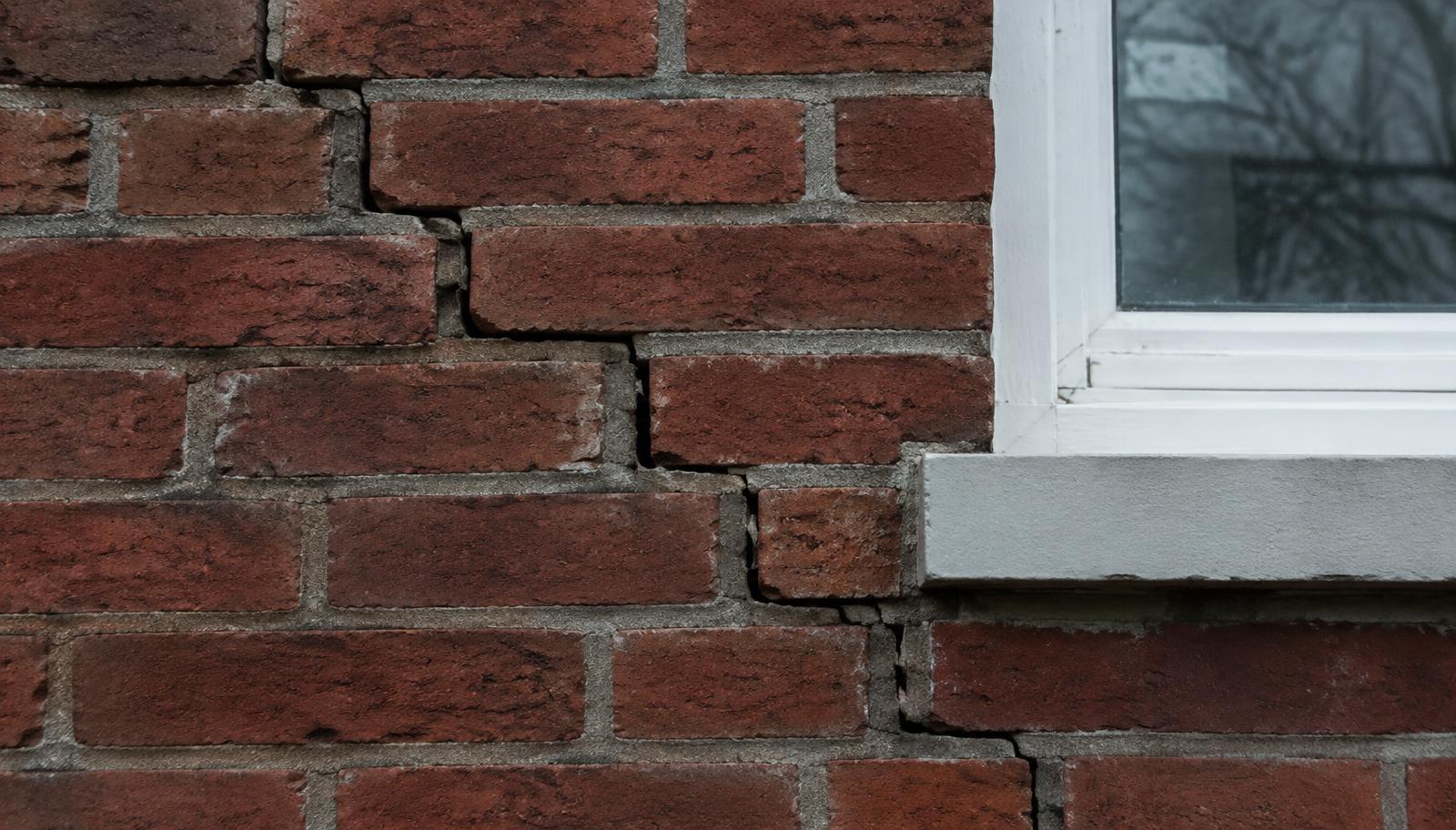
A stepped diagonal crack running through the mortar joints of a red brick wall beside a window

Brickwork guide

Cracks in brickwork: what the patterns show, what to record and what to do next

Cracks can look similar while having different causes. This guide explains the patterns worth recording, signs that should be looked at promptly and the information that helps an assessment begin.

Tell us about your brickwork concern

The crack patterns seen most often

The shape and position of a crack carries useful information. These are the patterns we are most often asked about:

  • Stepped cracks following the mortar joints diagonally, commonly near window and door openings or at the corner of an extension.
  • Vertical cracks running straight through bricks and joints, sometimes at a junction between two parts of a building.
  • Horizontal cracks along a bed joint, which can relate to wall ties, a lintel or a restraint issue.
  • Fine map-like cracking in the mortar only, often surface weathering rather than movement.
  • Cracking concentrated below a sill, above a lintel or where an older and newer section of wall meet.
  • Cracking accompanied by bulging, leaning or bowing of the wall face.

Signs worth acting on sooner

The appearance of a crack does not confirm its urgency. The following are reasons to have the wall looked at promptly:

  • The crack has visibly widened over weeks or months.
  • You can see daylight through it, or it passes right through the wall.
  • Doors and windows have started to bind or no longer close as they did.
  • The wall is bulging, leaning or feels loose when the area is examined.
  • Water is getting in, or there is new internal damp near the crack.
  • Bricks around the crack are loose, displaced or spalling.
  • A lintel, sill or arch above an opening has dropped or cracked.

What an assessment considers

The cause should be understood before a repair is chosen. Filling, stitching or repointing without enough information may leave the underlying issue unresolved. An assessment may consider:

  • The width, length, direction and depth of the crack and whether it tapers.
  • Whether the crack runs through the bricks, the joints, or both.
  • Its position relative to openings, corners, extensions, lintels, sills and wall plates.
  • Whether the pattern repeats elsewhere on the property or on neighbouring elevations.
  • External factors: trees, drainage, ground levels, rainwater goods, recent excavation or building work.
  • The age and construction of the wall, including whether it is solid or cavity and the condition of any wall ties.
  • Any history — when it appeared, whether it has been filled before, and any monitoring records you hold.
  • Whether specialist structural engineering or surveying input should be brought in alongside the brickwork work.

What to record before you enquire

A short record made now is genuinely valuable. Photograph the crack from a distance so its position on the elevation is clear, then close up with a ruler or coin beside it for scale. Note the date. Repeat the same shots from the same positions a few weeks later.

Also note anything that changed around the time the crack appeared: a nearby extension, a new driveway, a removed or planted tree, a leaking gutter or drain, or a long dry spell.

Common questions

Are all cracks in brickwork serious?
Not necessarily. The width, pattern, location and any change over time all matter. A photograph or description alone may not establish the cause, so avoid assuming that a small crack is harmless or that a larger one has a particular explanation.
What does a stepped crack mean?
A stepped crack follows the mortar joints diagonally in a staircase pattern. It is a common indicator of differential movement between parts of a wall, but the underlying cause still needs to be established rather than assumed.
Should I monitor a crack before doing anything?
Often, yes. Recording the width, length and date with clear photographs, and repeating that over a period, gives far more useful information than a single look. If a crack is widening quickly, doors or windows are binding, or the wall is bulging or leaning, it should be looked at promptly.
Can you carry out structural engineering or a formal survey?
We provide brickwork inspection, defect assessment, estimating and remedial support within an agreed scope. Where structural engineering, surveying or other regulated expertise is needed, appropriately qualified professionals carry out that work and can be brought into the project.
How much does crack repair cost?
It depends entirely on the cause, the extent of the affected brickwork, the method of repair and access. Work is quoted to a defined scope after the details are reviewed, rather than priced from a website.

How to start a brickwork assessment enquiry

Send what you know about the crack. We can review the enquiry and explain what information, assessment or specialist input should be considered before repair work is estimated.

  1. 1

    Choose 'Homeowner' and 'Inspection or defect assessment' on the enquiry form.

  2. 2

    Give the property location or postcode, the property type and its approximate age if known.

  3. 3

    Describe the crack: where it is, roughly how wide and long, when you first noticed it, and whether it has changed.

  4. 4

    Mention whether photographs, any monitoring notes or previous reports are available, along with access details.

Tell us about your brickwork concern

No diagnosis, cause or price can be confirmed from website information alone. Enquiries are reviewed and we will explain what further information, a site visit or specialist input would be needed before an estimate is prepared.