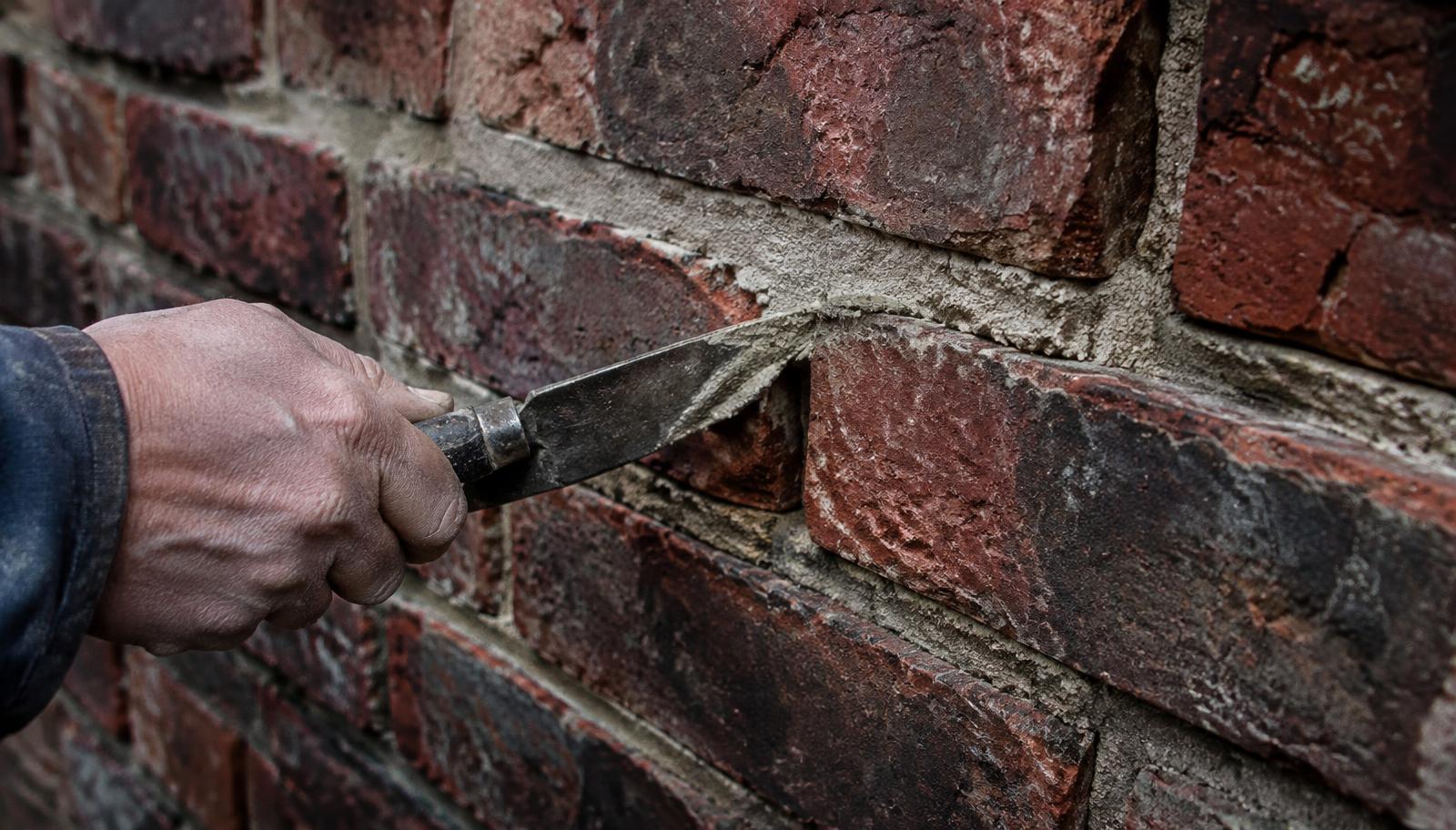
A pointing trowel raking out old mortar from the joints of a red brick wall

Brickwork guide

Repointing brickwork: signs of failure, what to check and how to get an estimate

Mortar joints can deteriorate as a wall ages and weathers. This guide explains what repointing involves, the signs worth recording and why the wall should be understood before repair work is priced.

Tell us about your brickwork concern

What repointing actually involves

Repointing is the renewal of the mortar in the outer part of the joints between bricks. The old material is raked out to a sound depth, the joints are cleaned and dampened as required, and new mortar is worked in and finished to a suitable joint profile.

The mortar, preparation and finish all matter. A poor match or shallow surface repair may fail early and can contribute to damage, particularly where harder mortar is used with softer brickwork.

  • Rake-out depth: generally to a depth that allows the new mortar to hold, rather than a thin skim over the old joint.
  • Mortar specification: the mix should suit the brick, the exposure and the age of the wall.
  • Joint profile: weatherstruck, bucket handle, flush or recessed, chosen to suit the wall and shed water.
  • Access: ladders, tower or scaffold, which affects both safety and cost.

Common signs that pointing is failing

Failing pointing rarely appears overnight. These are the signs most often reported to us by homeowners and property managers:

  • Mortar that is visibly crumbling, sandy or loose at the face of the joint.
  • Joints that have eroded back well behind the face of the brick, leaving the brick edges exposed.
  • Loose, hollow-sounding or missing sections of pointing, often on the most weather-exposed elevation.
  • Damp patches or staining nearby, while recognising that these can have causes other than pointing.
  • Moss, algae or small plants growing directly out of the joints.
  • Previous repairs in a visibly harder, greyer mortar that is now cracking away from the brick.
  • Spalling brick faces, where the outer skin of the brick flakes off after frost.

What an assessment considers

The reason for deterioration should be considered before repointing is specified. When we look at a wall, or review photographs and information sent with an enquiry, the following details are useful:

  • Whether the failure is general weathering or concentrated in one area, which can point to a different cause.
  • The condition of the bricks themselves, including spalling, erosion and earlier patch repairs.
  • The existing mortar: how hard it is, what it appears to contain, and whether a previous repair used an unsuitable mix.
  • Rainwater goods, copings, sills, flashings and ground levels, which often drive localised deterioration.
  • Whether cracking or movement is present, in which case the crack needs understanding before the pointing is renewed.
  • Access, scaffolding, working heights, neighbouring property and site logistics.
  • The extent of work: a single elevation, a patch repair or a whole property.

Why the mortar mix matters

Older brickwork can be harmed when a hard mortar is used with softer bricks. Moisture behaviour and exposure are part of the picture, and deterioration may show at the brick faces or along the joint edges.

Choosing the mix is therefore part of specifying the work, not an afterthought. The right choice depends on the brick, the construction of the wall, the exposure of the elevation and what is already there.

Common questions

What is repointing?
Repointing is the removal of failed or damaged mortar from the face of the joints between bricks and the replacement of that mortar with a suitable new mix. The bricks themselves usually stay in place; it is the mortar that is renewed.
How do I know if my brickwork needs repointing?
Possible signs include crumbling mortar, joints that have receded behind the brick face, or loose and missing pointing. Damp and vegetation can have several causes, so the wall and surrounding details should be considered before deciding on the work.
Does the mortar mix matter?
Yes. The mix needs to suit the bricks and the age and construction of the wall. On older, softer brickwork a hard cement-rich mortar can trap moisture and damage the brick faces, so the specification is part of any sensible assessment.
How much does repointing cost in Bristol?
Cost depends on the area to be repointed, the condition of the existing joints, access and scaffolding, and the mortar specification. We price each job to its own scope after reviewing the details, rather than quoting a fixed rate from a website.
Is repointing always the right answer?
Not always. Where cracking, movement or damp has another cause, repointing on its own may hide the issue rather than resolve it. Where a project benefits from specialist structural engineering or surveying input, we work alongside appropriately qualified professionals.

How to start an assessment or estimating enquiry

Begin by describing the condition of the wall. If the work is already clearly defined, we can then discuss the information needed for an estimate.

  1. 1

    Choose 'Homeowner' and 'Inspection or defect assessment' on the enquiry form.

  2. 2

    Give the property location or postcode, the property type and its approximate age if you know it.

  3. 3

    Describe which elevations or areas are affected, and what you have noticed — crumbling joints, damp inside, spalling bricks, previous repairs.

  4. 4

    Mention whether clear overview and close-up photographs are available, along with any access constraints such as height, a shared boundary or restricted parking.

Tell us about your brickwork concern

No diagnosis, scope or price can be confirmed from website information alone. Enquiries are reviewed and we will tell you what further information or a site visit would be needed before an estimate can be prepared.